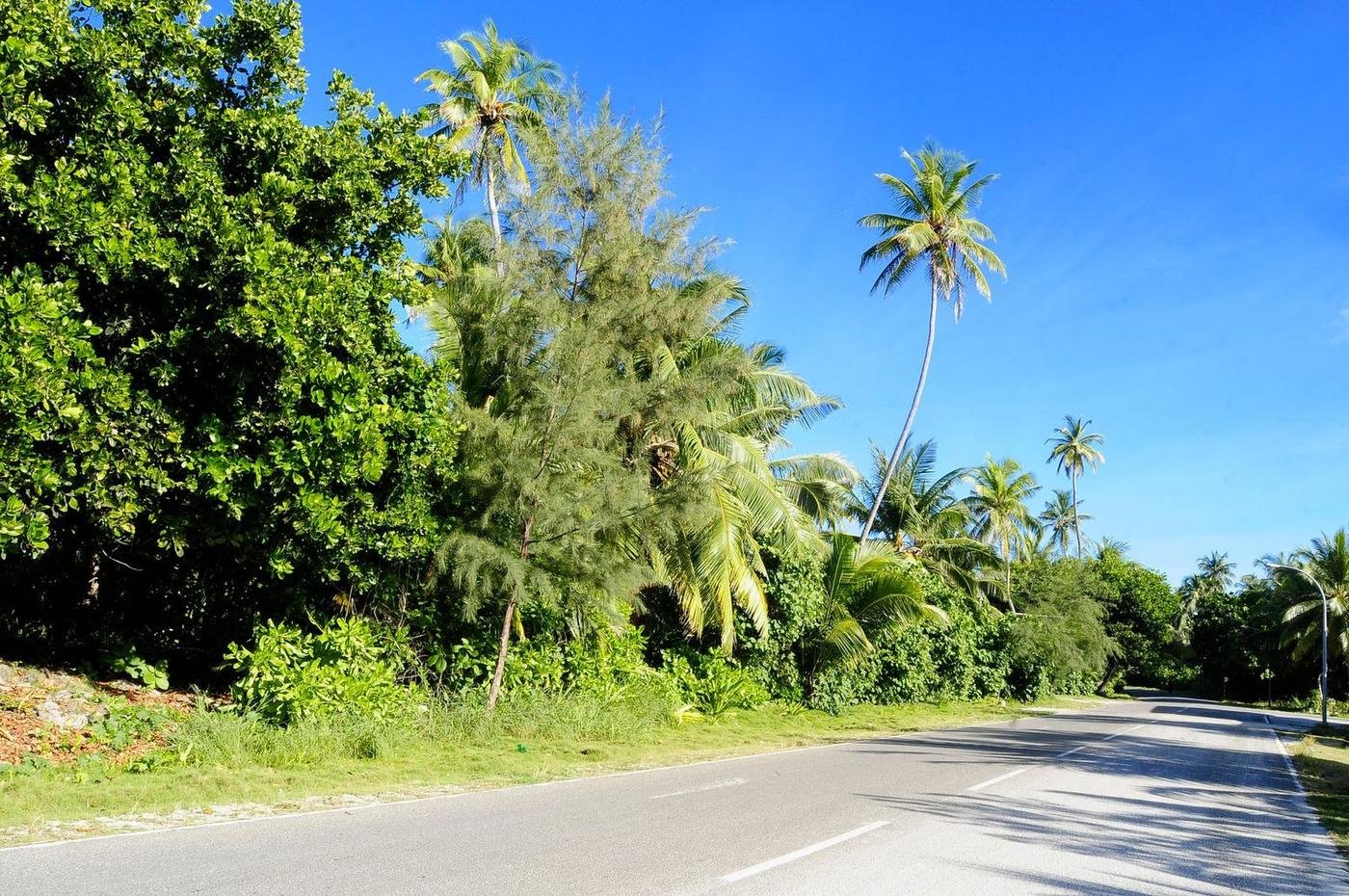
The tourist corridor is easy driving by Caribbean standards: paved roads, short distances, familiar signage, traffic on the right. The local rhythm is the part that needs learning, and it comes down to the list below.
Ten road realities, in the order you meet them
- Speed bumps everywhere. Called policias acostados, lying-down policemen, and they are the country's real traffic enforcement. They sit at village entrances and around Veron and Friusa, often unpainted and unsigned, so treat any cluster of roadside buildings as a warning and watch the brake lights of local drivers, who know where every one hides.
- Motoconchos in every gap. Motorcycle taxis overtake on both sides, carry families of three, and appear from side streets without looking. Assume any gap you leave will contain a motorcycle within seconds, and check mirrors before every lane change and every door opening.
- The horn is a greeting. A short tap means "I am here," not an insult. Locals use it constantly and so should you, especially in Friusa traffic at 6 pm when bikes pass within centimetres of both mirrors at once. Hold your line and go steady.
- Fuel by the gallon. Prices are set nationally each week, about RD$290 for premium, call it five US dollars, so stop wherever is convenient. Stations are full service: an attendant fills the car while you say the amount in pesos or ask for "lleno." Glance at the pump to confirm it reads zero before filling starts, pay in pesos cash, and rounding up 20 or 50 pesos is a normal courtesy.
- Police checkpoints. DIGESETT stops, most common on the Higuey road, are almost always uneventful: slow down, window down, hand over your home license and the rental contract, carry on. Your home license is valid for tourist stays, and if anyone hints at an on-the-spot fine, politely ask for the written ticket. The conversation usually ends there.
- Potholes and the Macao stretch. Most corridor pavement is decent, but Highway 105 has rough patches and the final few hundred metres to Macao beach are rutted dirt. In dry weather, crawl over it in first gear; with standing water in the ruts, park at the top and walk the last stretch. A flat from a pothole is the most likely incident a renter meets, so confirm the spare exists at pickup.
- Roundabouts, loosely observed. The Boulevard Turistico del Este uses them along the hotel zone. Traffic already inside has priority in theory; confirm it with eye contact in practice, and expect a motoconcho to cut the circle entirely.
- Buses overtake with enthusiasm. The Higuey road is a fast highway where guaguas and tour coaches pass anything slower. Stay right and let them go. A Picanto holds 90 to 100 km/h there without drama, which is as fast as the road deserves.
- Night driving narrows the margin. The boulevard and hotel zone are fine after dark. Beyond them wait unlit stretches, unpainted bumps, bikes without lights, and dogs asleep on warm asphalt, so run the Higuey trip in daylight and keep evening driving inside the corridor.
- Parking in El Cortecito. Street spots near the beach bars are informal and tight, and a young man may direct you into one and expect 50 to 100 pesos when you leave. Pay it cheerfully; the system doubles as someone watching your car, and the spots themselves were measured for cars the size of yours.
None of this amounts to hard driving, and most visitors are comfortable by the second day. The one classic outing a car cannot do is Saona Island, which leaves by boat, so book the excursion instead and keep the car for the coast. The habits that matter are boring ones: moderate speed through anything resembling a village, mirrors before every move, a few thousand pesos in the glovebox, daylight for the longer runs. A small car makes the learning easier, since the lanes, the gaps, and the parking spots of this coast were all sized long before the SUVs arrived.